There are many types of mahjong, but the major styles are American, Hong Kong (Cantonese), Chinese Official, Japanese Riichi, Taiwanese, and Vietnamese. They share the same core: draw and discard tiles to build a winning hand of sets and a pair. They differ in tile count, hand size, whether jokers are used, and how hands are scored.
Mahjong styles at a glance
| Style | Tiles in set | Tiles in hand | Jokers | How you win and score | Where it's played |
|---|---|---|---|---|---|
| American | 152 (many sets include extras) | 13 | Yes, 8 | Match a hand on the annual National Mah Jongg League card | United States |
| Hong Kong (Cantonese) | 144 | 13 | No | Build sets and a pair; points (faan) for patterns | Hong Kong, Southern China, Chinese communities worldwide |
| Chinese Official (MCR) | 144 | 13 | No | Minimum 8 points from 81 scoring patterns | International tournaments |
| Japanese Riichi | 136 | 13 | No | Must have a scoring pattern (yaku); declare "riichi" when one tile away | Japan and worldwide online |
| Taiwanese | 144 | 16 | No | Longer hands; points for patterns | Taiwan |
| Vietnamese | 160 to 176 | Varies by rules | Yes, special jokers with specific roles | Joker-based play; rules vary by region | Vietnam and Vietnamese communities worldwide |
American mahjong
American mahjong uses racks, jokers, a pre-game tile exchange called the Charleston, and a card of winning hands that changes every year. You can only win with a hand on that year's card. For the story of how it got here, read The History of Mahjong: From China to the American Table.

Hong Kong (Cantonese) mahjong
A style many Chinese families play at home. There's no card and no jokers, and racks are optional. Hands score in faan (points), and many tables set a minimum to win.
Chinese Official (MCR)
A standardized rule set first published in China in 1998 and now used in international tournaments. It has 81 scoring patterns and an 8-point minimum to win.
Japanese Riichi
Played with 136 tiles and no flowers. You need at least one scoring pattern to win, and you can declare "riichi" when you're one tile away. It has a large following in Japan and online.
Taiwanese mahjong
Players hold 16 tiles instead of 13, which means bigger hands and more combinations.
Vietnamese mahjong (Mạt chược)
Uses 160 to 176 tiles, with special jokers that can only replace certain tiles.
Which type of mahjong should you learn first?
Learn the style your friends or family play. In the US, many local groups play American. The skills transfer: once you can read tiles and build sets, picking up another style gets much easier. Start with our free lessons at Lucky Academy.
Can one set play every style?
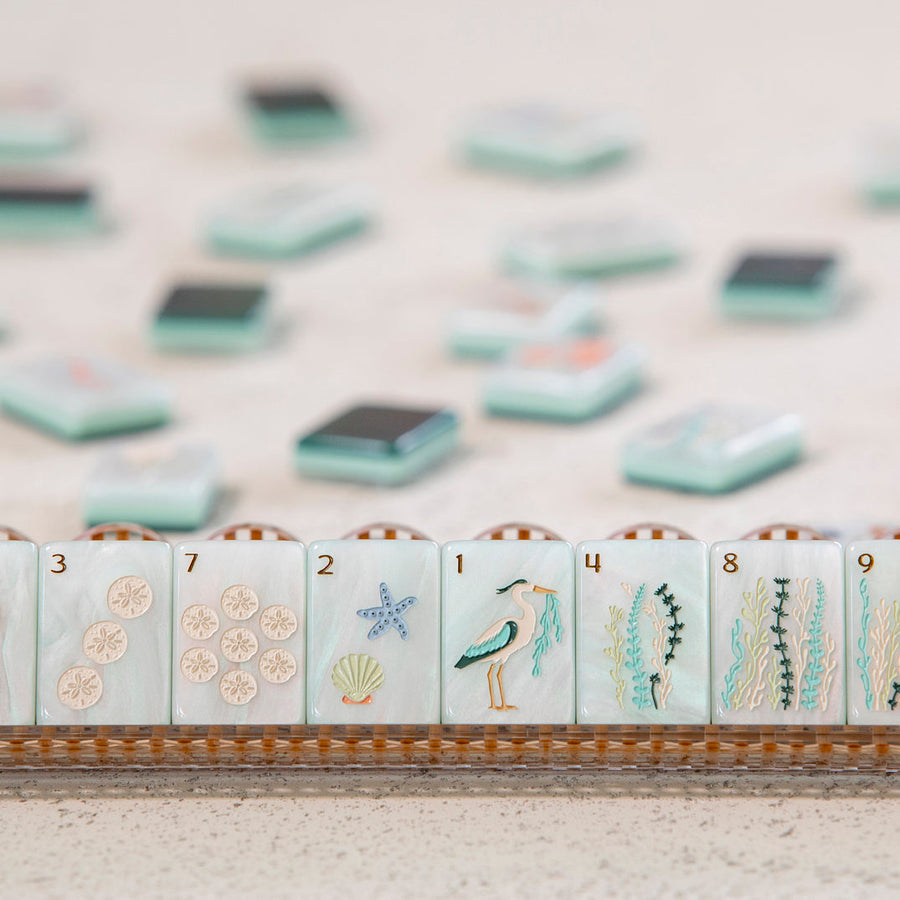
Not always. American sets have jokers and Western index numbers in the corners. Many Asian sets don't. A 160+ tile set with jokers and indexed tiles can handle both American and Chinese styles. At Lucky Daughters, our goal is to be a bridge for players no matter what style they play. Shopping for a set? Read how to choose a mahjong set.
Types of mahjong FAQ
What is the difference between American and Chinese mahjong?
American mahjong uses jokers, racks, the Charleston, and an annual card of winning hands. Chinese styles have no jokers or card and score hands by patterns.
How many tiles are in a mahjong set?
A standard Chinese set has 144. American sets have 152 or more. Japanese Riichi uses 136. Vietnamese sets have 160 to 176.
Which type of mahjong is easiest to learn?
It depends on who you'll play with. Every style is approachable with a good teacher and a few practice games.
Is mahjong solitaire the same as mahjong?
No. Mahjong solitaire is a one-player matching game that uses the same tiles. Mahjong is typically a four-player game of skill and strategy.
Sources: Tom Sloper, tile counts by style; World Mind Games, mahjong rules.